Here are some of the thinks i like to do to keep my engine performing like new, outside of routine maintance and flushing.
Keep the tank full with Req 90, this helps prevent condisation.
Use fuel aditive on every fill up. Marvel mystery oil or, yamalube ring cleaner, quickleen, Lucas, Roy purple. basically any decent additive?.
Either every run or atleast every 20 hrs, pull the cowling off and rinse the engine, dry it with a leaf blower, sun and air.
Coat the engine with a corrosion preventave/luberacation spray like, T9, corrosion x, yamashild, silicone, quicksilver, etc. Any decent corrision preventive and salt blocker. make sure to coat the outside bolt heads and mid section area.
once a year or every 100hrs flush the engine with dawn and vinager or a saltaway type product. rinse that out with fresh water. Side note be carful flushing your engine with “well water” that has high calcium or mineral deposits. they can build up.
inspect, inspect, inspect and look closer. look at the harder to see and reach areas for salt build up or rust. Pull the fly wheel cover off and look for rust or salt. clean and corrision blocker as needed.
dont forget to clean the inside of the engine cowling.
I’m sure im forgeting some things, feel free to add in what your extra engine maintance list includes.
I was gonna make a similar post but will instead add to yours!
If you perform your own annual services make sure to check/replace all anodes according to your owner’s manual! I am seeing a pile of newer used outboards for sale lately all with holes rotted through various locations!
Buy a dozen prop cotter pins at a time. Pull the prop every 20 hours, check for line, and relube. Your not looking for your own line - its other peoples.
Question…I looked through the oil geek post and some mentions in octane. I have a Yamaha 130 2s. I use rec 90-92 depending on the station I fill up at. There is a place with rec 87 I think but I got e-85 from the pump one time and although they did pay to have the fuel tank cleaned out and carbs cleaned they didn’t close the pump down, they just sold it out so I won’t ever use them again. I have heard from some that a high octane fuel is bad for my motor…although it seems to run better, maybe just my imagination, thoughts on the higher octane? Am I over thinking this?TIA.
Umm had to read what you wrote a few times. I think the answer to your question is just use Req fuel.
Higher octane is for specifically tuned engines that need more consistent detonation of fuel. I believe higher octane actually burns slower but more predictable.
I would just run req 90 if I was you.
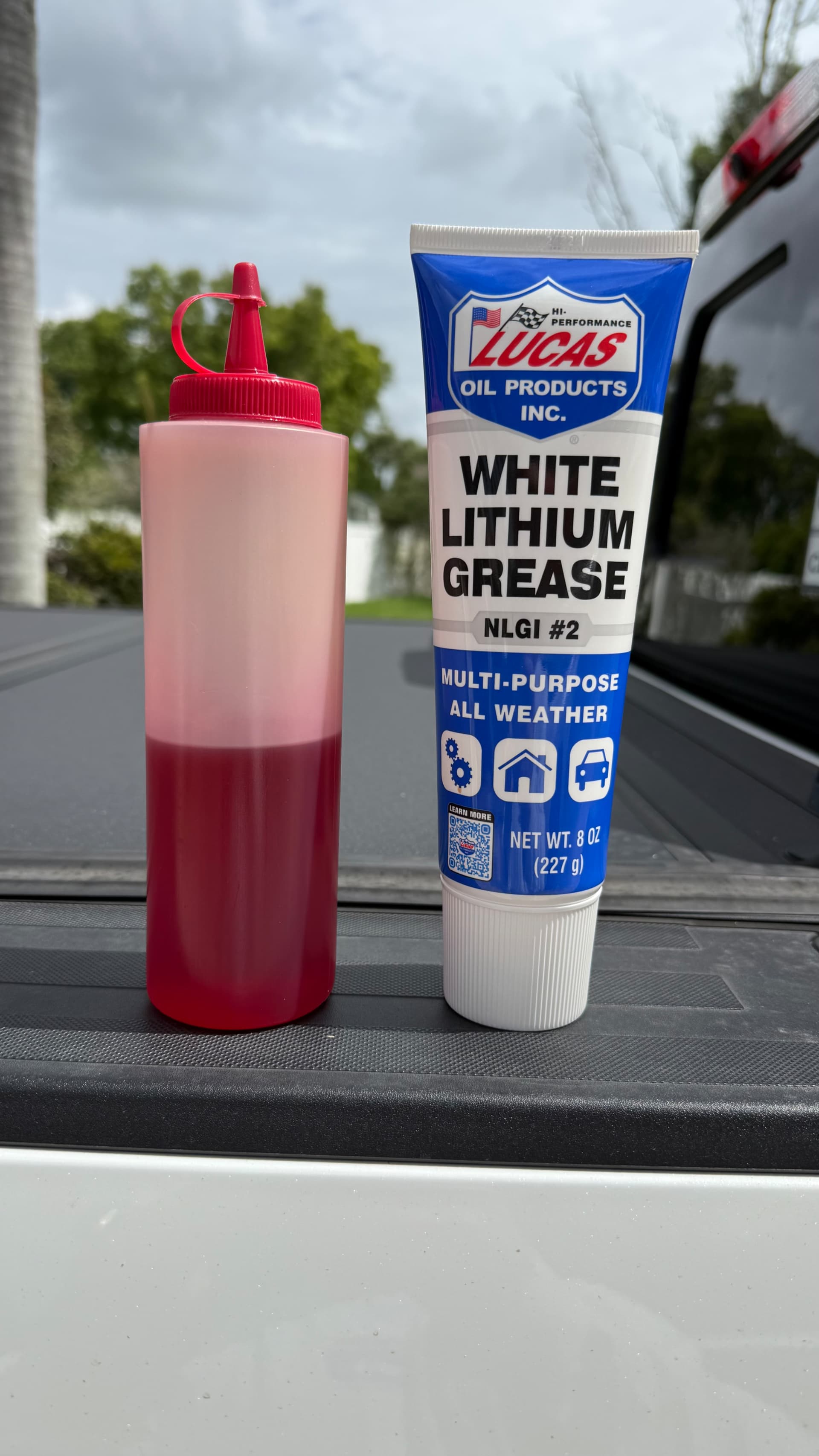
Years ago, I had a mechanic tell me to do this often to keep from having problems. I fill a ketchup squeeze bottle with hydraulic fluid and I put one or two drops on the steering piston rods. Make sure I rub it around with my fingers to coat the entire piston rod. Then I take a little grease and coat the trim and tilt piston rod. Knock on wood, but in all the years I’ve owned Skiffs I’ve never had an issue there. I do this at least every other trip.
Controversial take here but I’ve never run non-ethanol fuel in my boats. The motor that has been in our family the longest is a 2001 Yamaha VMAX that just finally died a year ago. Had it since new and it has run a lot of ethanol through it :). I’ve had Mercury and Yamaha and not had a problem (knock on wood).
A tip I like that’s more simple than salt away that I got from a buddy is before I flush the motor I turn the hose off and drop a decent squirt of dish washing soap into the garden hose and then turn the hose on and let he run for about 5 minutes or so till all the bubbles are gone.
I obviously wash everything well, but on my Suzuki I make sure and really wash/soap the factory steering bracket that attaches the motor to the steering cylinder.
We had this bust on a friends motor and it was a disaster for us to get back to the ramp with one guy physically moving motor and other guy running throttles at high idle.
As I do for my trailer, I have a 2 gallon Dewalt sprayer full of salt off or similar, and every time I come off the water, I spray it down as I leave the ramp. I have about a 2 hour ride home before I am able to hit it with a garden hose.
Wheels and hubs get the spray, along with straps, basically anything in the water.
When I get home or the next day, I will put the lower unit in a large tube that covers the lower unit and run the engine for 15 minutes or so. I then attach and run about 6 oz of saltaway via the unit attachment without the engine running.
From what I’ve read it has cleaning properties and should be run as the last item when cleaning the flush unit.
For fuel, I run what the OEM says - Mercury 87 octane.
I DIY all my own oil etc. Cheap and easy and feel it’s the most important for engine longevity. I normally change at 75 hours or so. Same with fuel filters - on and external. I use the RACOR clear view.
Last - I try and buy my fuel from one station - Chevron by my house - has easy access and is a high volume sales location.
So hydraulic fluid on the steering bar and grease on the trim rod? Sorry I’m not too hip in the lingo but I’ve always wondered if I should be applying lube of some kind to that steering bar. Thanks.
How are y’all flushing with vinegar and dawn? Are you making a solution in a tub and running the engine? Or running it through the flush line? Whats the ratios? You made me realize I may should’ve been doing more than hooking up to the water hose all these years.
I use the saltaway product on my infuser, that attaches in between the motor and the hose, it mixes the saltaway with the water and you can flush u til it comes out clear.
You can do the same thing with dawn and vinegar, I have used that when I ran out. I run the whole infuser with vinegar and flush the engine, then I put a 1/2” of. Dawn in it add water and finish flushing the engine.
I don’t think you get the same effect if you just connect a straight hose to the engine, unless it’s for a quick rinse in between trips.
Here is the infuser I use to mix the flushing solution
I just got back from the coast and ran well water through the flush line about 10 min and also trolled about 4hrs on a fresh water lake. I have been assuming this would get all the saltwater out. Y’all have got me youtubing this thing now and rydlyme came up and seems to really descale everything. I have never pulled an anode from the cooling jacket either. How often do y’all check/replace those anodes?
Well flushing w freshwater is better than not flushing, but adding a chemical that adheres to salt and extracts the salt through chemical binding is a better option since you are trying to remove salt from water conduits, the longer you flush the better the effect etc. straight water works but not as well as adding a binding agent for the salt.
Just thinking out loud here, vinegar is acidic like 5ish ph and dish soap is alkaline 8-9ish ph so if you mix them they should cancel each other out right? Guessing doing the vinegar first would cut the calcium like buildup then the dish soap cuts the aluminum oxides and ferris oxides and such. I can see how hooking a defuser to the flush line would work or doing the tub technique separately. Mixing vinegar water and soap as seen on some of the videos seems to me would neutralize the solution. When you mix a base with acid don’t you get salt water?